My rights
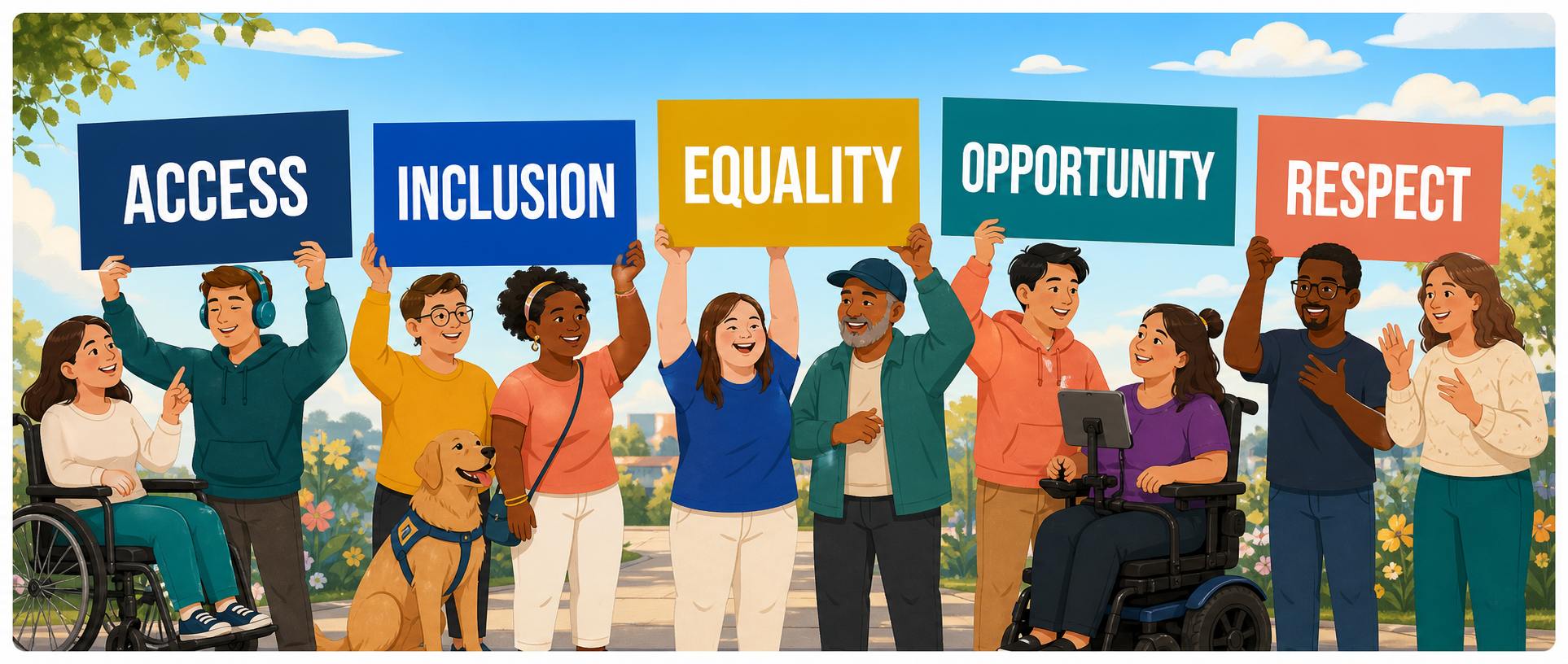
You have the right to be treated with respect and to take part in your community. Support should help you make choices—not take your choices away.
Your rights can include
The exact law depends on where you live and the situation.
- Freedom from disability discrimination
- Accessible communication
- Privacy and personal space
- A voice in your support plan
- A way to ask questions or make a complaint
Rights where you live
Home should feel safe and like your own. In your living space, you have the right to be treated with dignity.
- Privacy in your own room and belongings
- A say in your daily routine
- Visits from people you choose
- Freedom from harm or unfair rules
Reasonable changes
A reasonable modification or accommodation is a change that helps a disabled person have equal access. An example could be extra time, plain-language information, or another way to communicate.
Making your own choices
You have the right to be part of decisions about your life. If you want help deciding, supported decision-making lets a trusted person help you understand choices—while you stay in charge.
It is okay to say no
You can ask questions, disagree, or say no. You can take time to think, ask for information in a way you understand, or bring someone you trust before you decide.
If a right is not respected
You do not have to handle it alone. There are steps you can take.
- Tell a trusted person what happened
- Write down the date and what was said or done
- Ask for the complaint or grievance process
- Contact a self-advocacy or disability rights group
Get help understanding a right
A self-advocacy group, disability rights organization, or trusted support person can help you understand your options.
Learn more from an official source: ADA.gov: Rights and resources ↗