Our disability history
For a long time, many people with disabilities were kept apart, denied choices, or placed in institutions. Disabled people and their allies organized to change this.
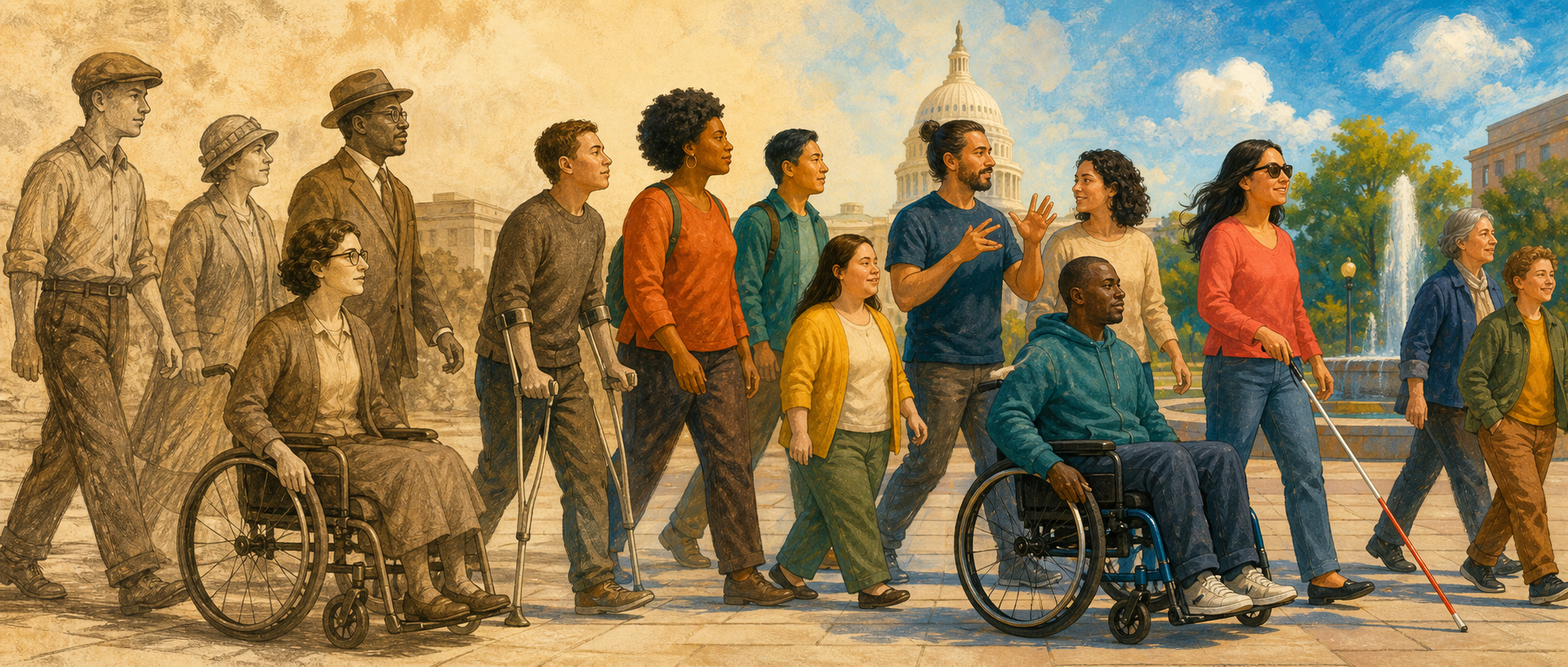
Disability rights through time
Change happened because disabled people spoke up, organized, protested, and worked together with their communities.
- Before the 1970s
People were often kept apart
Many disabled people were sent away to institutions or excluded from schools, jobs, and community life. Disabled people, families, and allies began organizing for dignity and change.
- 1972
Willowbrook was exposed
News reports revealed the neglect and harmful conditions inside Willowbrook, a large institution in New York. The public outcry pushed the country toward reform and community living instead of institutions.
- 1973
Section 504 became law
Section 504 of the Rehabilitation Act made disability discrimination illegal in programs that receive federal funding. It became a foundation for later civil rights protections.
- 1975
A right to public education
A new federal education law said children with disabilities have a right to a free, appropriate public education. That law is now called IDEA.
- 1977
The 504 Sit-in
Disabled activists led protests across the country to demand that Section 504 be enforced. The San Francisco sit-in lasted 25 days and helped win strong regulations.
- 1990
The ADA became law
The Americans with Disabilities Act expanded protection from disability discrimination in work, public places, transportation, communication, and government services.
- 1999
Community living is a civil right
In Olmstead v. L.C., the U.S. Supreme Court ruled that unjustified segregation of disabled people is discrimination. The decision supported the right to receive services in the community when appropriate.
- 2006
A global disability rights treaty
The United Nations adopted the Convention on the Rights of Persons with Disabilities. Countries around the world agreed that disabled people share the same human rights as everyone else.
- 2008
The ADA was strengthened
The ADA Amendments Act made clear that the law should protect a wide range of disabilities. It restored rights after court decisions had narrowed who was covered.
- Today
The work continues
Disabled people continue to lead work for access, fair pay, community living, supported decision-making, healthcare, education, and full inclusion.
Learn more from an official source: ADA.gov: The Americans with Disabilities Act ↗